
Not Every Winning C-Store Is a Chain
In February 2026, NACS, the National Association of Convenience Stores, highlighted the story of Mikey Stutes and his independent convenience store, a small-town operation that skeptics said could not succeed but has since become a genuine community staple. It is the kind of story that rarely makes national headlines alongside billion-dollar acquisitions and multi-state chain expansions, but it is one that matters enormously to the roughly 152,000 convenience stores currently operating across the United States, the majority of which are independently owned and operated. According to the 2026 NACS/NIQ TDLinx store count report, there were 151,975 convenience stores in the U.S. at the start of 2026. The vast majority of those are not Wawa or Circle K or Casey’s. They are independent operators, family-owned businesses, and regional chains that serve communities where the big brands have not arrived yet and may not for years.
For certified welding contractors who serve the fuel retail industry, these independent operators represent a critically important and often underserved part of the market.
What Makes an Independent Station Succeed
Independent convenience stores that thrive in small towns share several characteristics. They invest in the customer experience beyond just the fuel transaction. They offer quality food and beverage options, reliable service, and a sense of community connection that larger chains struggle to replicate at scale. But none of those customer-facing qualities are possible without the physical infrastructure working correctly underneath them.
A fuel station that succeeds in a small town over the long term is one where the canopy does not leak, the fuel systems are code compliant and well maintained, the foodservice equipment is properly anchored and safely connected to gas lines, and the overall facility is structurally sound enough to remain operational through years of heavy use. That kind of physical durability does not happen by accident. It is the result of quality construction and certified welding work performed to the right standards from the beginning.
According to data published by NACS and CSP Daily News, foodservice now accounts for 28.7% of in-store sales at U.S. convenience stores and 39.6% of in-store gross margin dollars. In 2004, foodservice represented just 11.9% of in-store sales. That shift in revenue composition means that a well-built foodservice operation is increasingly central to the long-term financial health of any fuel and convenience location.
An independent c-store that outlasts the skeptics is not doing it with marketing alone. It is doing it with a facility that works. Every welded fuel connection, every properly mounted piece of kitchen equipment, every structurally sound canopy post is part of what makes that store a place the community can rely on day after day.
The Foodservice Buildout Challenge for Independent Operators
For independent fuel station operators who want to build or upgrade a foodservice program, the construction and installation requirements can be significant. Commercial kitchen equipment such as grills, fryers, warming stations, and hood systems requires structural anchoring, gas line connections, and exhaust infrastructure built to commercial code. Stainless steel fabrication for prep surfaces and equipment enclosures must meet health and safety standards. Hood and ventilation systems require structural welding to support their load and ensure proper exhaust routing.
These are not jobs for general handymen. They require certified welders who understand commercial kitchen installation requirements, know how to work within active operating environments, and can deliver work that passes inspection and stands up to the daily demands of a high-volume food operation.
Serving the Operators Who Build Community
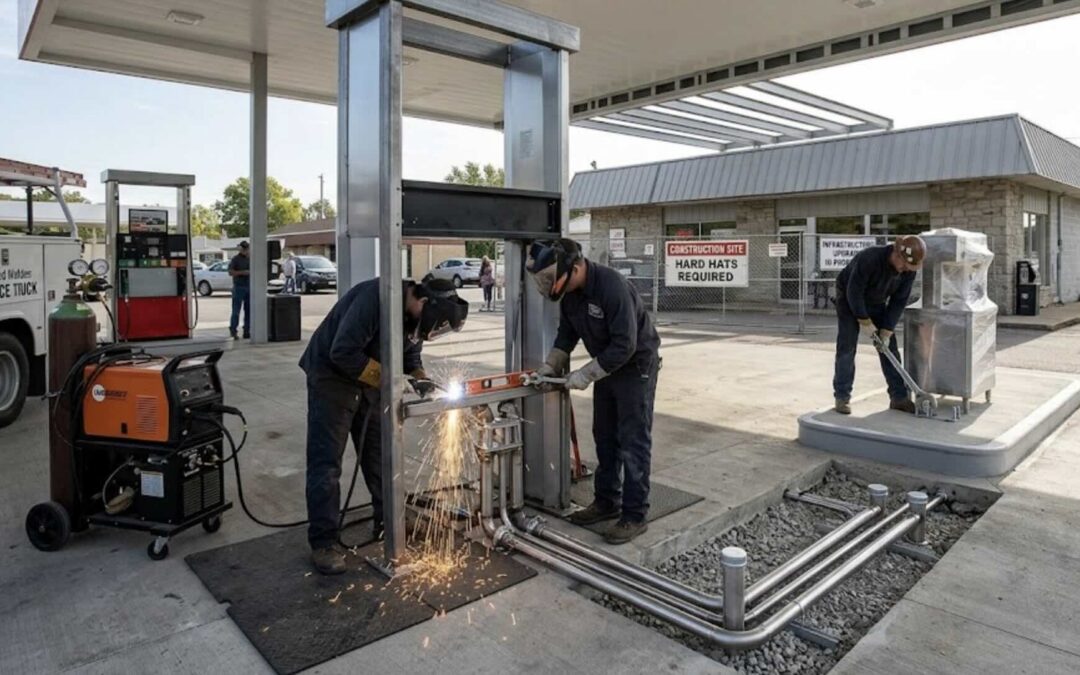
Sarlo Certified Welding respects the role that independent fuel station operators play in the communities they serve. Whether you are building a new station from the ground up, upgrading your foodservice area to compete with the regional chains moving into your market, or simply making sure your aging fuel infrastructure meets current code requirements, our certified welders are ready to support your project.
• Fuel canopy structural repair, reinforcement, and replacement
• Fuel dispenser island construction and equipment mounting for single-site operators
• Commercial kitchen equipment anchoring and certified gas line connections
• Stainless steel fabrication for prep surfaces and food equipment enclosures
• Exhaust and ventilation system structural welding for foodservice installations
• Underground and above-ground fuel system connections and code compliance welding
Ready to build or upgrade your fuel station infrastructure? Contact Sarlo Certified Welding today at sarlocertifiedwelding.com and let our team bring your project to the finish line with the quality and precision your business depends on.